The Penang History is related from the days of Penang founder Sir Francis Light during the 18th century. The real Penang settlement was started with the coming of the Mainland Chinese and East India Company Indians.
Pulau Kesatu in Penang History was also known in the 15th century by Admiral Cheng Ho because Tamils traded pinang (areca nut).
The Portuguese, who stopped at Batu Feringgi (Foreigner's Rock) or present day Batu Ferringhi to refill their ships with fresh water saw Pulo Pinaom on their maps.
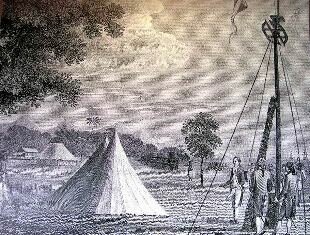
On August 1786, Francis Light, a trader for the East India Company planted a British flag. He named the once Pulo Pinang, Prince of Wales Island in honour of the heir to the British throne. Penang has then became part of India in Penang History.
The cape was formerly known as Tanjong Penaigre as the hardy ironwood called penaga, which Francis Light induced the early settlers to clear. Locals would called Georgetown, Tanjong till today.
In Penang History, it was said he made the early settlers clear the north eastern cape George Town by firing a cannon full of coins into the forest. He then taught them to make cannon balls.
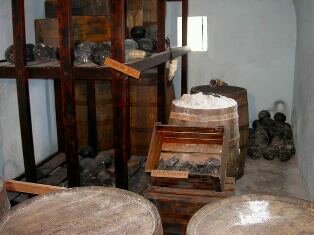
Penang or Pulau Kesatu was once part of the Malay sultanate of Kedah. Kedah's efforts to gain peace with the Siamese King by giving Bunga Emas between 1821 to 1906 was unfruitful.
Pulau Pinang (the land of the betel nut) was exchanged for military protection from the Siamese and the Burmese armies who were threatening Kedah.A total of 32 Bunga Emas and Perak was presented throughout the period, each about 1.5m in height.
The Sultan did not know that Captain Francis Light promised military protection without the approval of the East India Company.
When East India Company failed to help Kedah when it was attacked by Siam, the Sultan tried to retake the island in 1790.
All efforts failed, and the Sultan was forced to cede the island to the Company for 6,000 Spanish dollars yearly. With Province Wellesley added to Penang, it was increased to 10,000 dollars in 1800.
To this day, an annual honorarium of 10,000 ringgits continues to be paid by the Malaysian Federal Government to the state of Kedah.
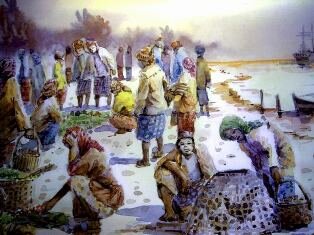
In 1826, Penang, along with Malacca and Singapore, became part of the Straits Settlements under the British administration in India, moving to direct British colonial rule in 1867 in Penang History.
The traders in early Penang History bought pepper, clove, nutmeg, gambier, ivory and more stuff of the archipelago for selling to the early settlers traders of Europe, America, Arabia, India and China ships.
The Chinese would mostly purchased areca nuts, bird's nest and tin. The British traded wool, chintzes and opium for spices.
By the mid 19th century, the tin rush created the influx of Chinese coolies into the Malay states of Perak, Selangor and Johor.
In 1867, the control of the Straits Settlement was transferred from India to the Colonial Office in Singapore, and then Suez Canal was opened in 1869, helped speed up Penang's recovery.
Read about the intrigues of the Taochiews of Province Wellesley in Johor history. Troubles between the locals Malays sultans and Chinese triads of the Ghee Hin and Hai San increased British intervention with the signing of Treaty of Pangkor.
In Malay history, Penang was founded way back in the early 15th century by Nahkoda Ragam. Read about Bayan Lepas, Gertak Sanggul and Pulau Kendi and how it was linked to this legendary Malay seafarer.
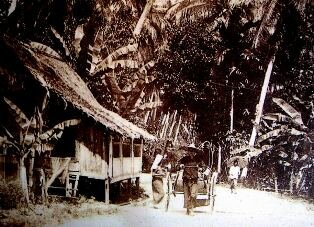
Penang by now became the export centre for northern states with the development of the Federated Malay States Railway.
At the turn of the century, the regional trade had expanded enough to encourage the leading European companies in Singapore to establish branches in Penang.
The first world war, then in Europe saw commodity crashes destroyed families in the 1920s and 30s. Then came the Second World War where more fortunes were lost.
Sar Nie Peh Koay Jie in Hokkien,(3 years and 8 months), World War II saw bombs dropped on the city and being occupied by the Japanese from December 1941 until September 1945 was the longest most difficult period for everyone round the world.
With the Second World War going on, Chinese ran into the jungle to hide and then formed a Malayan People's Anti- Japanese Army under Chin Peng.
Chin Peng was the liaison officer between the MPAJA and Lord Mountbatten, the leader of the British South-East Asian Command (SEAC).After the war, reconstruction of Penang and the election of City Councillors was introduced.
In 1946 it became part of the Malayan Union, before becoming in 1948 a state of the Federation of Malaya, which gained independence in 1957 and became Malaysia in 1963.
Penang joined the new countryas a state. And Georgetown is the commercial centre for Penang State. The island was a free port until 1969.
Despite the loss of the island's free-port status, from the 1970s to the late 1990s the state built up one of the largest electronics manufacturing bases in Asia, in the Free Trade Zone around the airport in the south of the island.
As Penang is part of Malaysia, our history is older than Francis Light. Here you can learn about ancient Malaya, Early Hindu Age, About Islam and the golden age then colonial Malaya, later Malaysia.
Another great place to visit is Cool Iceland, read Thrandur site on his mother land. We too can visit Iceland as most people in Iceland do understand English though English is not their first language.
Back to Top of Penang History Page
Back to Malaysia Calendar Page
Back to Penang Introduction Page
Back to My Island Penang Home Page