The Tea ceremony is the most important event in the Nyonya Wedding. It can be delightful or it can be a nightmare.
Being introduce to your new found relatives, having to called them by their rank like " Tua Pek" (elder uncle) or Tua Mg" (elder aunt), can be quite a mouthful.
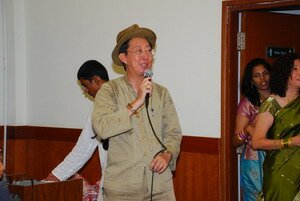
So we usually have a "Seng Keh Mg" to help with the calling of relatives by seniority. Micheal, our Nyonya Wedding Planner happen to be quite amusing when calling out the relatives for the ceremony.
Junnie, my sister turned the "assistant to Seng Keh Mg". She hands the Ang Cho Teh " Lotus and Date tea to the groom for offering.
But before I share the tea ceremony, there were some other events. The "kooi bin" (opening face or face threading) is a sign to alert the bride that she is no longer a girl but a grown up woman, ready to be a wife or daughter in law.
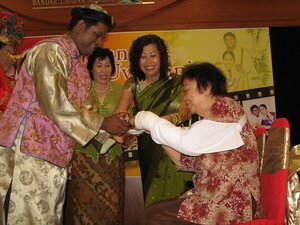
Ancestor Worship
Then announcement to the ancestors about the marriage. Food has to be prepared and served to the ancestors.
Bride Parents Tea Ceremony
After prayers to the ancestors are over, the bride for the last time offer tea to her parents, thanking them. In the straits settlement days, the Seng Keh Mg (match maker) does all these rituals.
She will arrange to have the bride's parent seated in preparation for the tea ceremony in the house. Then the bride is made to bow to her parents for the last time as their daughter. This seems to be some of the words they would pronounce.
"You are grown up now and leaving your parents house to enter that of your husband. You must be obedient to your husband and parents in law."
Usually before she could finished her advises, both parents and the bride would be sobbing their hearts out. Some daughters even fainted at this point and concerned parents tried to make it easier for her by being brave and not crying too.
This happen to us again in the morning of the wedding. Finally reality strike you that you are really losing your daughter.
Pre Nuptial dinner
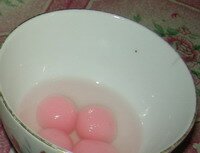
In both household, the relatives and close friends are invited to the pre nuptial dinner. Then there is the prayers to the God of Heaven and eating of "Kuih Ee". "Kuih Ee" is glutinous rice balls cooked in sugar syrup.
It is said that swallowing the glutinous rice balls without biting will help ward off bad luck so tradition persists until today. At the stroke of midnight, the young bride will offer prayers to the God of Heaven and then the mother would feed her the rice balls.
Significance of Tea offerin
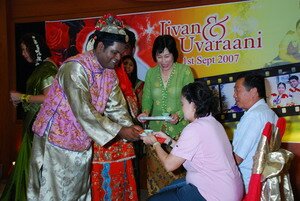
After the unveiling ceremony of the bride, Jivan carried on with the tea ceremony. The role of the Seng Keh Mg (match maker)is the most important. She has to know all the family members and relatives so that she won't announce the wrong ranks of relatives.
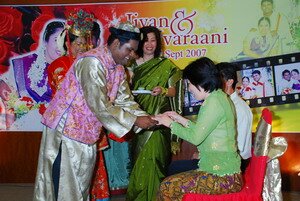
In respect to the elders, the oldest in the family takes the first tea offerings.In some weddings, they purposely get a sporting or fashionable lady who is spontaneous to help make the tea ceremony as jovial, lively and fun as possible.
Symbolic meaning of Lotus Tea
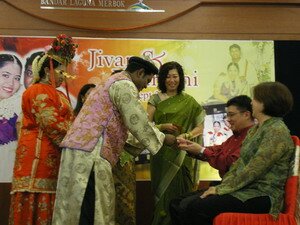
Though it is a tea ceremony but tea is not used here as it is a happy occasion. Ang Cho Teh (Red Dates Tea) is prepared. Lotus seeds and two dates are brewed to make this sugary drink.
To Chinese, lotus, seed, year, child and early have same sounds but carried different good symbolic meanings.
Chinese tradition holds that adding the items to the tea helps to encourage fertility. This also ensure many grandchildren for their parents.Also, the sweetness of the special tea is a wish for sweet relations between the bride groom and her new family.
How is tea offered?
As Uvaraani is the bride family, I would share based on the bride experience.
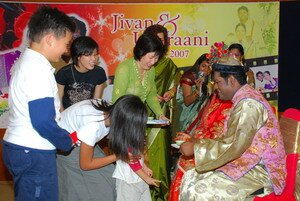
When offering "Ang Cho Teh" to the bride family, Jivan was guided to hold the teacups with both hands, inviting the elders to partake the tea by addressing them by formal rank and title and in the bride's own dialect. It can be in Hokkien, Cantonese or Taochiew or plain English if not to torture the groom.
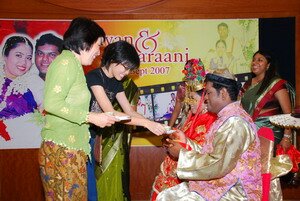
Usually in a wedding, you get to witness all three to four generations of family members present for the tea ceremony. Starting with both grandparents, paternal and maternal, parents, uncles and aunts then siblings and last and not least, nieces and nephews.
Sitting position
The lady sits on the left side and the man on the right side. The people being served will sit in chairs, while the bride and groom kneel.
The "Seng Keh Mg" (match maker) will usually advise the groom to kneel to offer tea to the mother in law while the bride guide the husband kneeling in front of her father.
After sipping the tea, it is customary to place a red packet (ang pow) on the saucer to wish the newly weds well.
Watch this tea ceremony live held recently in Penang Cheah Kongsi. The teen couple are Jewel and Joshua, kids of the Nyonya (Peranakan) Society in Penang.
For all offering tea, the bride and groom kneel or stands throughout the ceremony. Only when it is groom's turn to drink the tea, when the youngest rank served to him. In which case, the nieces and nephews.
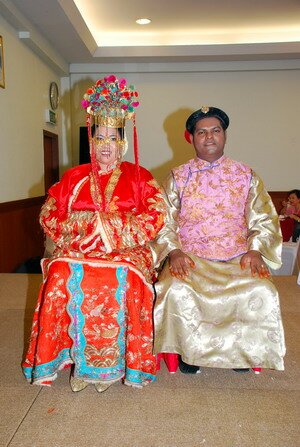
Some of us will still remember these exact words used by the Nyonya, "Lim ta ta, meh ni sie ba ba" when encouraging the newly weds to drink their tea when the nieces or nephews offered the drink. "Drink until dry and next year you bear a son"! they would scream. The teasing never stops here.
Our deepest gratitude to Michael for rental of the age old traditional wedding gown of both bride and groom , head gear and accessories. What do you fancy? A tropical edding or a Nyonya Wedding? Would you like a tea ceremony for your wedding? Talk to Michael.
Go to the top of Tea Ceremony Page
Back to Indian Wedding Rituals Page
Back to Penang Wedding Planners Page
Back to photos of Indian Engagement Page
Back to Malaysian Indian Engagement Page
Back to Malaysian Puberty Ceremony Page
Back to Puberty Ceremony Photos Page
Back to Indian Wedding Decorators Page
Back to My Island Penang Home Page