logo for my-island-penang.com

Home
Penang Blog
Penang Introduction
Penang Events
Penang Info
Penang Hotels
Penang Festivals
Penang Folklores
Penang Food
Beyond Penang
Places of Worship
Pictures Of Penang
Kee Heritage
Family Circle
Advertise with us
Site Search
My Hidden Treasures
Privacy Policy
Keep in touch
Teluk Bahang
Chinese New Year
Penang Shopping
Getting Here
Getting Around
Penang Cheap Hotels

[?] Subscribe To
This Site

XML RSS
Add to Google
Add to My Yahoo!
Add to My MSN
Add to Newsgator
Subscribe with Bloglines


leftimage for my-island-penang.com
 

Snake Temple Penang

A Photo Review

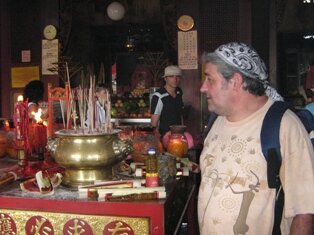
Scary for me, but i took more Snake Temple photos also known Temple of the Azure Cloud.

As I continued walking around, the crowd has slowed down, as I can't imagine the smoke from the joss stick.

The incense and smoke never fail to make my eye watery. And I looked a mess as if I have been crying for days. So don't forget to wear closed up glasses to keep the incense or smoke from the joss stick off if you are like me, teary eyed.

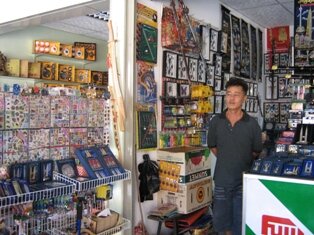
Walking to the temple you find souvenir stands on both sides of the temple. Mr Sim owns a nice souvenir shop. He told me about the snakes in the temple .

A few were laying in a big incense burner, where they burn large incense. Although poisonous, these snakes are not known to bite. Devotees refers to them as keepers of the temple and regard them as `holy and harmless'.
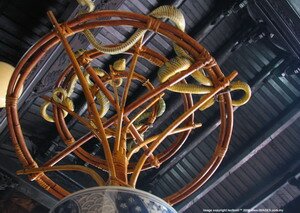
Snakes at temple altar in Penang
Green Vipers siesta time or dizzy..too much smoke in temple altar

Mr Sim even told me about the three monks that came over to Penang who bought with them the statue of Cheng-Swee_Zu_Shi. The locals calls it  'Cheng Swee Chor Soo', or simply as Cheng Shui Gong.  'Zu-shi' or 'Chor Soo' is an honorable title which interprets as 'an eminent historic figure who is continuously reversed by a community for generations'.

During the colonial days of David Brown, a British settler was cured after he felt sick. The Monks had medical knowledge and offered their services to those who believed in Chinese medication. He later donated land to built the temple.

It is no joke to fall sick those days, as there was simply no medication. I heard from my grand aunts from the Khaw Boo Aun line, the Sinkehs were dying in doves from dysentery, cholera and thyroid.

This is one site seeing in Penang that excites some tourist who loves snakes. Not me, sorry! See more photos of the Snake Temple. Picture will take some time to load, ya..wait ok..
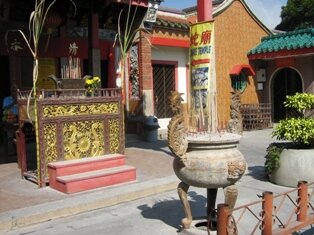
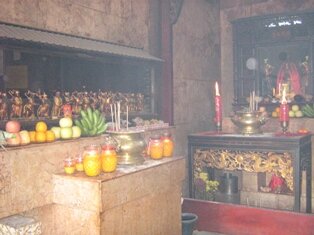
Heavenly God Altar in Snake Temple
Hokkien Origin Temple with sugar cane offering to Heavenly God
Tourist looking for snakes on Table
Visitor in Snake Temple
Sub Lineage Gods 18 immortals
18 Lor Hans (Immortals) at the side of main Altar
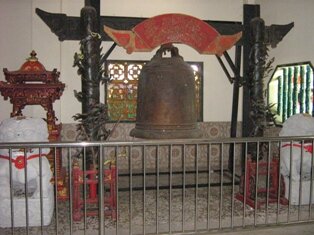
Viper resting on bell in Penang
600 Years old Manchurian Bell
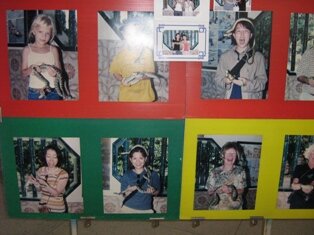
Collection of photos with vipers
A collection of Visitors with snakes

Mr Sim in Penang Snake Temple souvenir shop
Mr Sim owns a souvenir shop in Snake Temple, Lot 8

Go to Top of Snake Temple Page

Back to Places of Worship Page

Back to Chinese New Year Page

Back to My Island Penang Home Page


Page copy protected against web site content infringement by Copyscape


footer for My Island Penang page


leftimage for my-island-penang.com

Search 30+
travel sites
at ONCE!
Teluk Bahang Temple
Sea Goddess, guards the Andaman Sea and fisherman in Teluk Bahang. Quiet throughout the year.

Sri Singamuga Kaliamman

Except in January, she takes a round journey in the evening and come back before midnight. A spectacular  event not to be missed.

Floating Chariot Procession

Nyonya Traditions

The Peranakan culture is essentially a cultural blend of mainly Chinese, Malay and some European descent, very often bearing the best of each.

Peranakan, which means, "locally born" in the Malay language, was to be the name of subsequent generations of Chinese-Malays.

To Westerners, they are commonly known as "Straits-born Chinese".

Through sheer hard work, the sin-kehs got richer and being street smart got into the good books of the British, became Kapitan and enjoyed a new life style. Cross-cultural relationships and marriages were natural by-products when these rich traders married local Malay women.

Some even went back to China to get husband or wife to remain in contact with their homeland.

Nyonya Wedding